
Gum Disease Treatment in North Dallas
Bringing Help to Ailing Gums

While they aren't the "flashiest" parts of your smile, your gums play a crucial role in oral health. These tissues keep your grin strong and stable when they work well, so problems with them harm your whole mouth. We thus offer gum disease treatment here in North Dallas alongside our other dental services. Through this procedure, Dr. Mitchell heals your weakened gums so that they can keep your smile safe. Learn more about it by reading below, or book a consultation soon.
Why Choose North Dallas Cosmetic Dentistry - Robert B. Mitchell for Gum Disease Treatment?
- Proudly Serving the North Dallas Area for 30+ Years
- Comprehensive Dental Care Under One Roof
- Named One of America’s Top Dentists by the Consumers Research Council of America
What Is Gum Disease?

Per its name, gum disease is the infection of your gums – the pink tissues surrounding your teeth. It often results from plaque buildup due to poor oral care, a bad diet, and similar matters. The condition can also stem from risk factors like genetics, smoking habits, and so on.
Gum disease has two main stages: gingivitis and periodontitis. The first refers to a slight gum inflammation, which is fairly irritating but ultimately reversible (with proper care). In contrast, periodontitis is a severe infection that attacks and erodes your gum and jaw tissues; it’s irreversible and can’t be fully cured.
Symptoms of Gum Disease

Because gum disease has two separate stages, it can show a wide range of symptoms. The specific signs it shows depend on its severity, rate of progress, etc.
Gingivitis has relatively mild symptoms, all things considered. These typically include:
- Chronic bad breath (i.e., halitosis)
- Slightly receding gums
- Gum irritation and swelling
- Bleeding gums
Meanwhile, the signs of periodontitis are rather harsh. The most notable ones are:
- Tooth sensitivity (often due to gum recession)
- Chewing pain
- Loose permanent teeth
- A shifting bite
- Changes in a restoration’s fit
- Permanent loss of teeth
How Do We Treat Gum Disease?

Depending on your case, our dental office can treat gum disease with three different methods. They are:
Laser Periodontal Treatment

Instead of “standard” scaling and root planing, you may benefit more from laser periodontal treatment. This option relies on a diode laser to remove your smile’s infected gum tissue. In doing so, it precisely targets your infection and removes harmful bacteria with no bleeding or pain. The process is thus non-invasive and leaves healthy gum tissue intact, all while promoting faster healing and recovery.
Antibiotic Therapy

Our office usually suggests antibiotic therapy for severe cases of gum disease. Performed with scaling and root planing, this procedure applies antibiotics to your infected gums. The applied medicine then kills the bacteria harming your gum tissues, dealing a major blow to your infection. It thus helps your gums heal over roughly two weeks, to the point that they have much smaller pockets.
Scaling & Root Planing
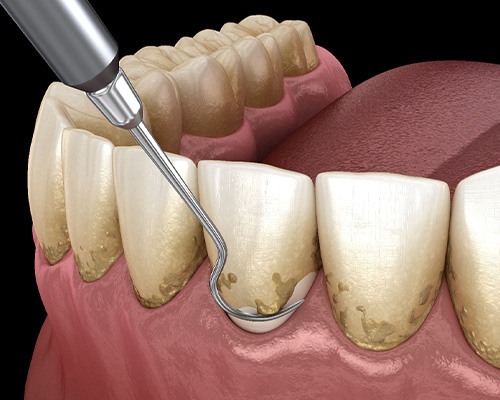
Widely hailed as the “traditional” gum disease treatment, scaling and root planing are a two-step “deep cleaning” of your gums. The first phase – scaling – removes plaque deposits from under and around your gums with special instruments. Root planing then smooths out your tooth roots, reducing your risk of reinfection and helping your gum tissues reattach. Both steps work together to make your gums healthier, and they show even greater effectiveness when combined with other options.
Do You Need Scaling & Root Planing?

To determine whether or not scaling and root planing is ideal for you, we will begin by examining your gums. X-rays are also captured to collect as much information as possible. Depending on the condition of your gum tissue, the depth of the pocks, and the progression of your gum disease, we might recommend scaling and root planing to keep the condition at bay.
The Process of Scaling & Root Planing

The complete scaling and root planing process is usually completed over the course of two appointments, but this can vary from person to person. To remove plaque and tartar, we will begin by scaling the teeth with dental tools. We will target the gumline and beneath the gumline where plaque, tartar, and bacteria build up.
After the scaling portion is complete, we will move on to the root planing portion of the treatment. This is when we smooth down sections of the teeth beneath the gumline. This helps the gums to adhere to the teeth, speeding up the healing process by making it more difficult for bacteria to build up in the future.
Aftercare Tips for Scaling & Root Planing

It is normal for the gums to feel a little bit sore after scaling and root planing. There may also be some inflammation in those areas. This is temporary and should subside over the next couple of weeks. Here are some tips to help your healing process go quickly and smoothly.
- Brush twice per day with a soft-bristled toothbrush and fluoridated toothpaste
- Rinse your mouth with saltwater after meals
- Floss daily
- Stick to a soft diet following your treatment
- Avoid foods and beverages that are spicy, acidic, or hot
- Refrain from intense physical activity